

By Bus Obayomi
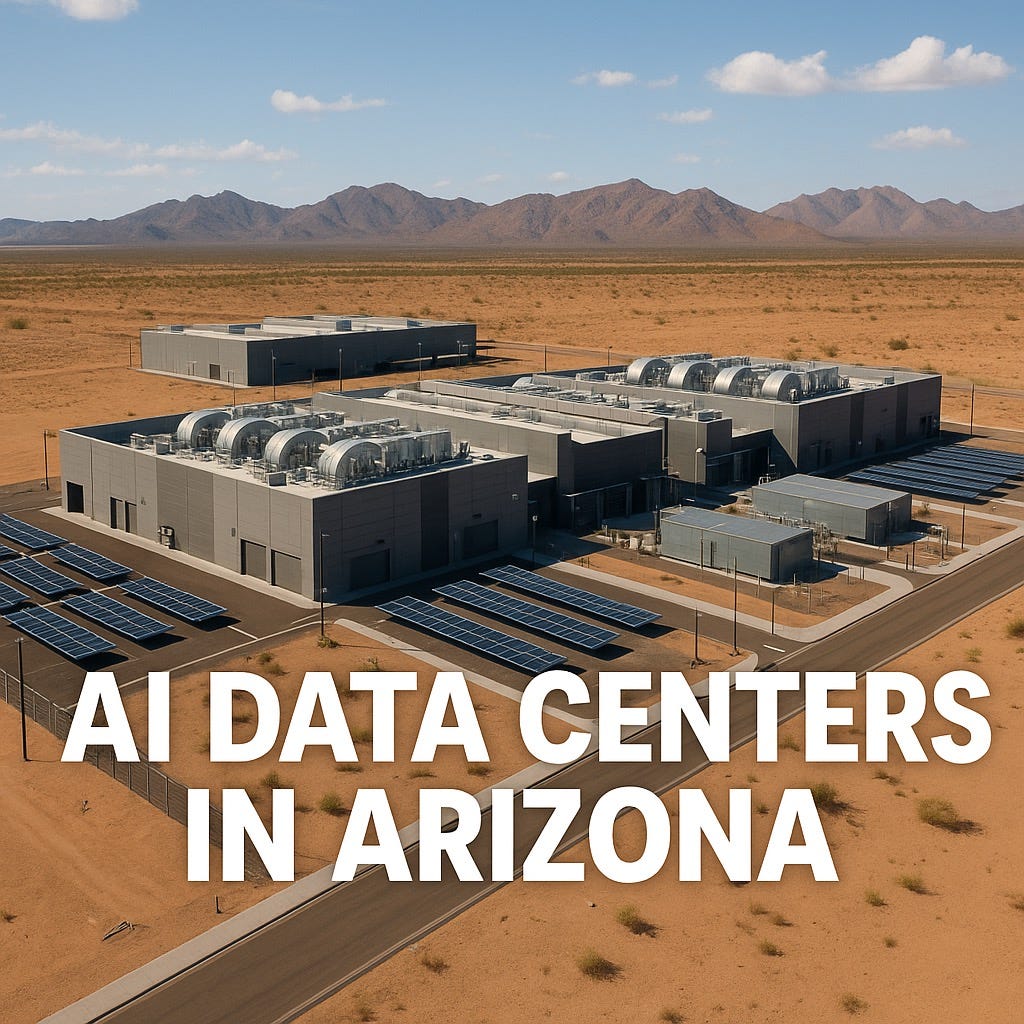
As artificial intelligence (AI) continues to reshape every sector of society—from healthcare and finance to transportation and defense—there’s an often overlooked but critical backbone supporting this transformation: data centers. And in recent years, Arizona has quietly become a rising hub for AI-driven data center growth.
But this isn’t just about tech infrastructure. It’s about jobs, economic development, public-private collaboration, and the digital sovereignty of our state.
Why Arizona?
Arizona is uniquely positioned to attract and sustain data center investment for a few key reasons:
Abundant solar energy and renewable power options
Favorable climate for cooling efficiency
Relatively low risk of natural disasters
Pro-business tax policies and data center incentives
Close proximity to West Coast markets without California’s high costs
Cities like Phoenix, Mesa, Goodyear, and Chandler have become magnets for hyperscale and edge data centers, creating high-demand zones for AI workloads and cloud storage infrastructure.
Data Centers Powering AI Workloads
AI systems require immense computational power and storage to process data, train models, and deliver insights at scale. This demand is fueling new generations of data center infrastructure—built specifically to handle:
High-performance GPUs
Distributed storage for large datasets
Cooling systems for energy-intensive AI workloads
AI-optimized architecture for faster model training and inference
With AI becoming more embedded in sectors like smart manufacturing, autonomous vehicles, digital healthcare, and smart city infrastructure, Arizona’s data centers are no longer just back-end facilities—they are engines of innovation.
Key Players in Arizona’s AI Data Center Ecosystem
Meta (Facebook) – Expanding a massive data center campus in Mesa to support its AI research and metaverse ambitions.
Microsoft – Building multiple facilities across Goodyear, El Mirage, and Phoenix for Azure and AI cloud operations.
Amazon Web Services (AWS) – Establishing high-capacity data centers to serve West Coast AI-driven clients from Phoenix.
Google Cloud – Actively investing in infrastructure in the region to handle AI and machine learning services.
Stack Infrastructure, NTT, and Iron Mountain – Operating mission-critical facilities optimized for AI and enterprise clients.
Opportunities for Government & Civic Innovation
The expansion of AI data centers in Arizona offers the public sector an unprecedented opportunity to:
Develop Smart Government Services – Use AI to optimize traffic, improve resource planning, and personalize constituent services.
Foster AI Workforce Development – Partner with data center operators to train students and reskill workers in high-demand AI and infrastructure roles.
Leverage Public-Private Innovation Hubs – Co-develop pilot projects where government agencies access AI capabilities via local data centers.
Ensure Digital Resilience – Build sovereign infrastructure that protects data integrity and cybersecurity for critical services.
A Call for Strategic Vision
As someone committed to the intersection of technology, governance, and community advancement, I believe Arizona must develop a comprehensive AI infrastructure strategy that includes:
Investment incentives for AI-native companies
Sustainable energy partnerships with data centers
Clear data ethics and governance frameworks
Integration of AI platforms into local and state systems
This is more than economic development—it’s about securing Arizona’s future in a digital-first world.
Conclusion:
The AI revolution is here—and it runs on data. Arizona has a rare chance to lead the nation not just in housing data centers, but in activating them for good, transforming how we serve residents, protect communities, and build the next generation of opportunity.
Let’s not waste it.