

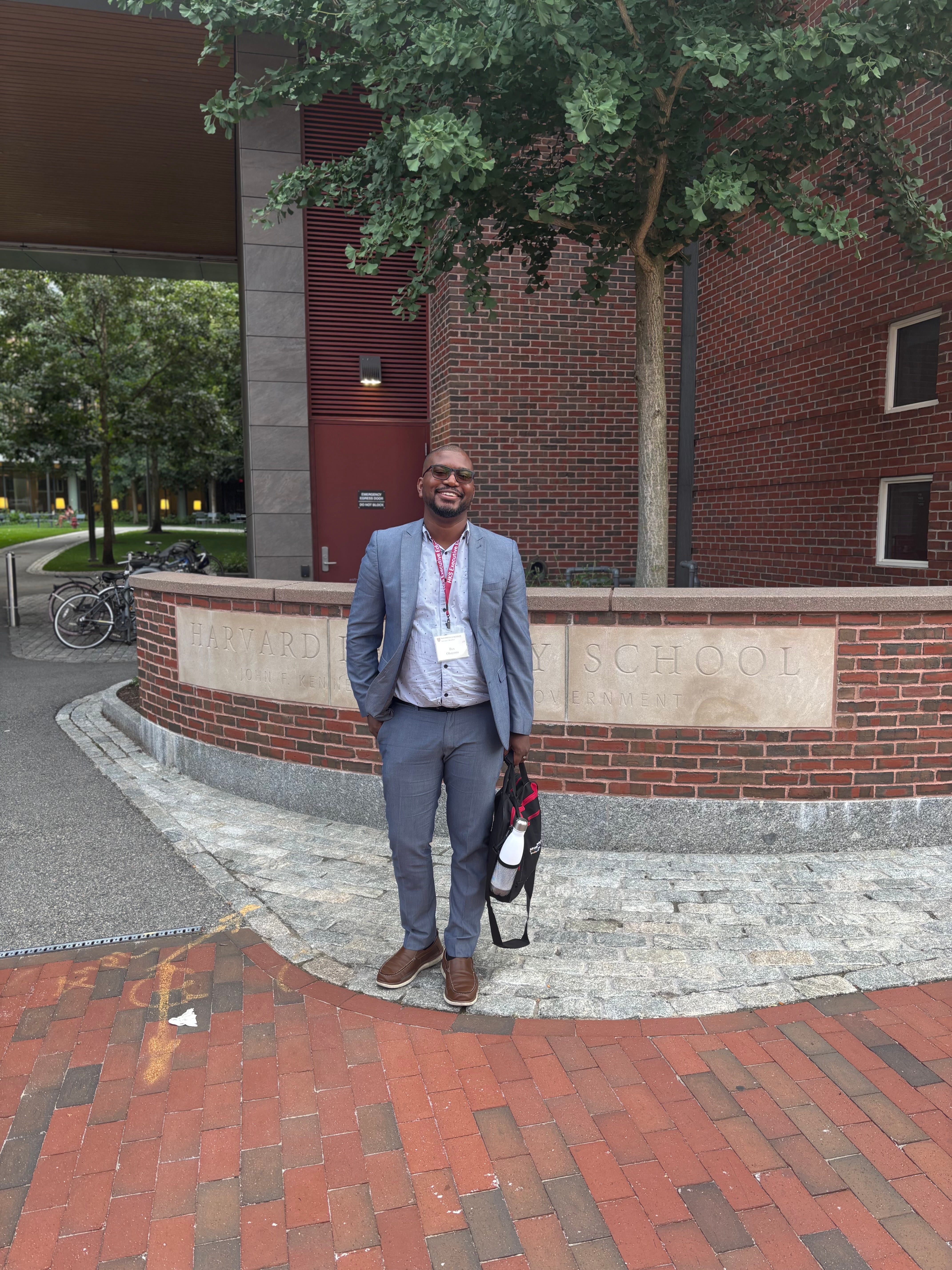
Today was an interesting one. I’ll be honest—I snoozed my alarm twice and almost missed the 7:30 AM bus to Harvard. But somehow, I made it. I rushed out the door, mentally preparing for a full day of learning and conversation. What I didn’t expect was how rich and meaningful the human encounters would be alongside the academic ones.
An Unexpected Reunion
Over breakfast at the Kennedy School café, I ran into Brian Kavanagh, a current New York State Senator. What made this encounter special? I interned at the New York State Assembly back in 2009—working with Ruben Diaz Jr. and Carl Heastie—and I remembered Brian from that time. He was surprised (and impressed) that I recalled him. Even more surprising, he said I looked familiar to him too.


Brian is here for a different executive program, but moments like this remind me how small—and connected—the world of public service really is.
Conversations That Matter
Throughout the day, I had several conversations that stood out. I connected again with the Member of the European Parliament in my course. These international conversations are becoming a highlight of my time here—every dialogue reveals new perspectives on governance, regulation, and the future of AI.
I also had a deep discussion with Bill, the Chief Technology Officer for the State of Massachusetts, about how the workforce is evolving in the face of generative AI. From automation to reskilling, the implications are vast—and real.
What We Learned Today
Today’s sessions covered a full arc—from the promise of AI in education to its technical foundations, ethical alignment, and the need for critical thinking.
🔹
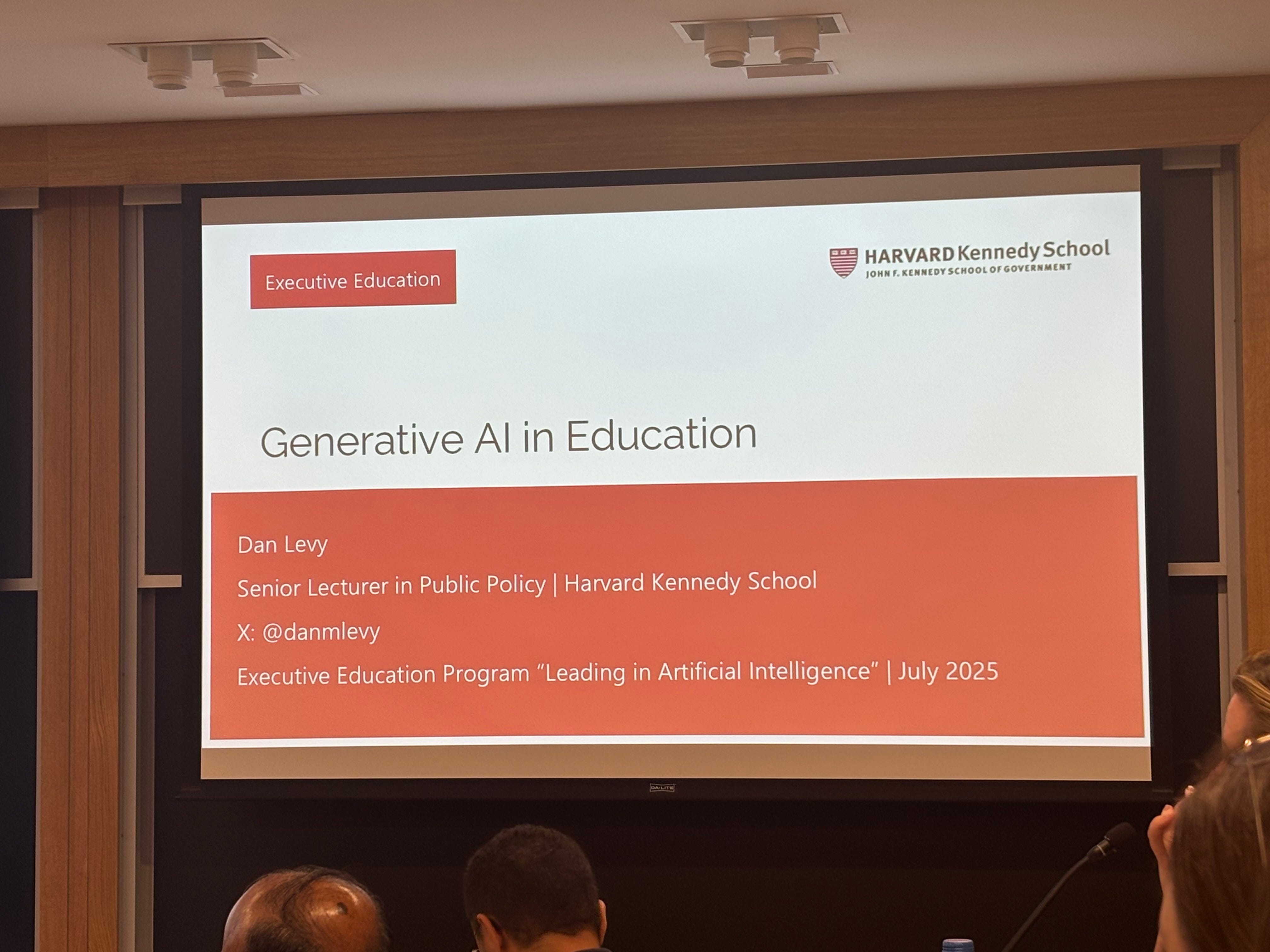
Session 1: Generative AI in Education
Speaker: Dan Levy
Dan walked us through the promise and peril of using AI in university admissions. From evaluating applications to improving communication, generative AI could play a supportive role—but only if aligned with equity, transparency, and sound judgment.
A reminder that AI can support decision-making, but never replace discernment.
🔹
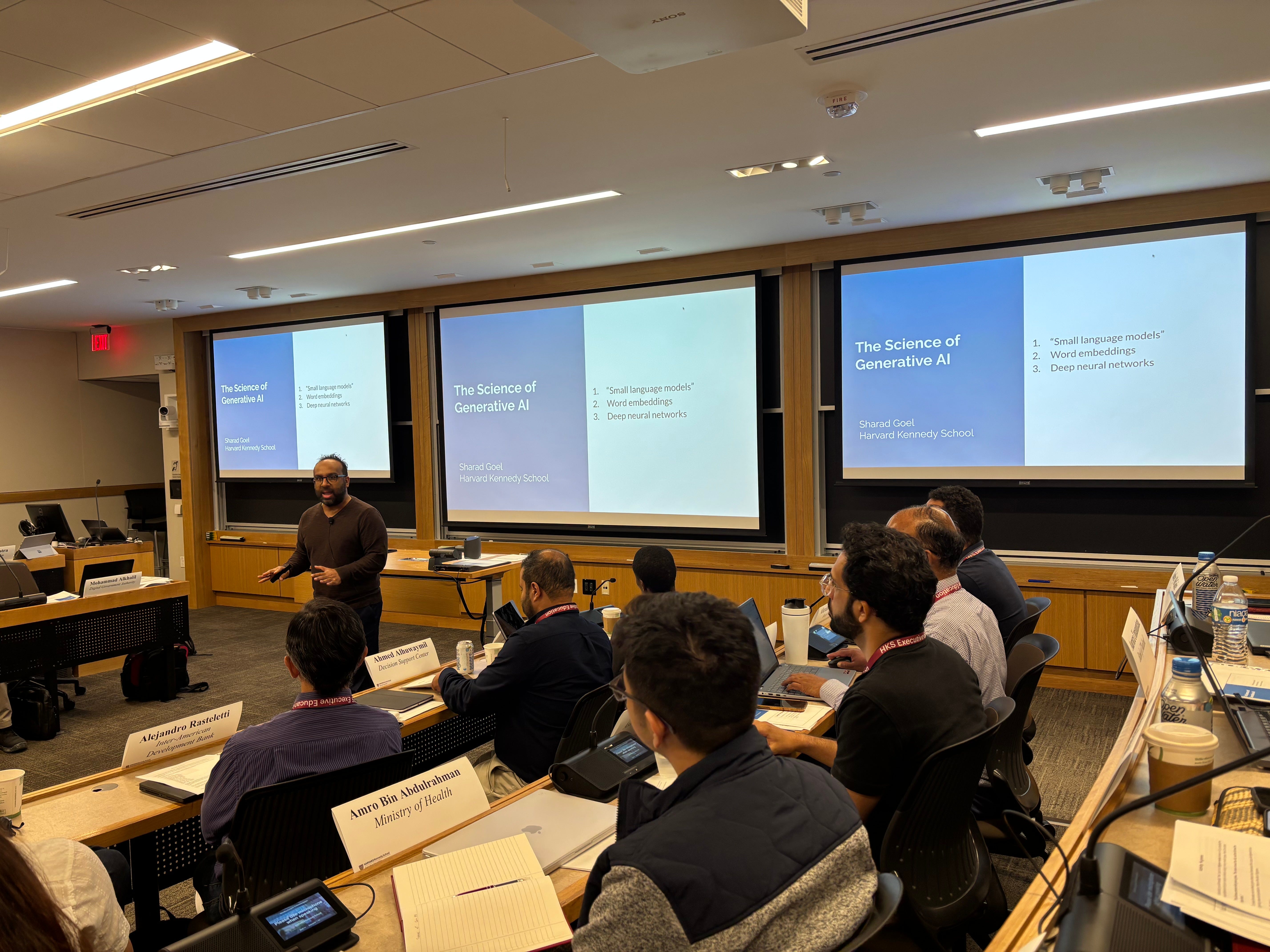
Session 2: The Science of GenAI
Speaker: Sharad Goel
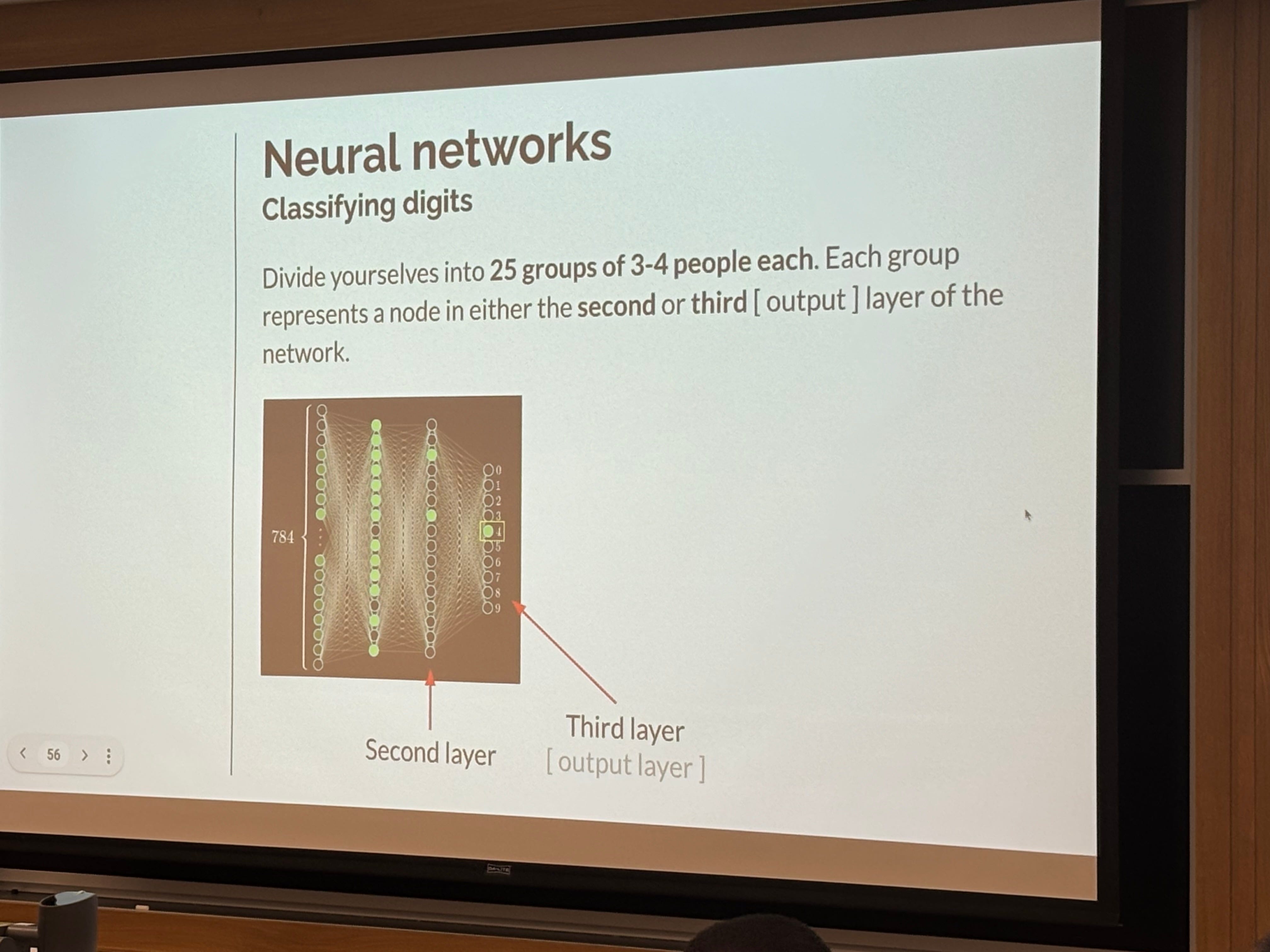
Sharad broke down the evolution of language models—from n-gram predictors to transformer-based large language models. He highlighted the two breakthroughs that changed everything:
Contextual Word Embeddings – making meaning computable
Deep Neural Networks – enabling complex prediction at scale
It was a fascinating dive into how prediction powers everything we think of as “intelligent.”
🔹
Session 3: AI Alignment
Speaker: Sharad Goel
We then shifted into the alignment problem—how do we ensure that AI behaves in ways that are not just coherent, but good?
Sharad walked us through approaches like:
Supervised and reinforcement learning
Post-training tuning
Constitutional AI, guided by high-level principles like honesty and harmlessness
These are the frontiers where technology meets ethics.
🔹
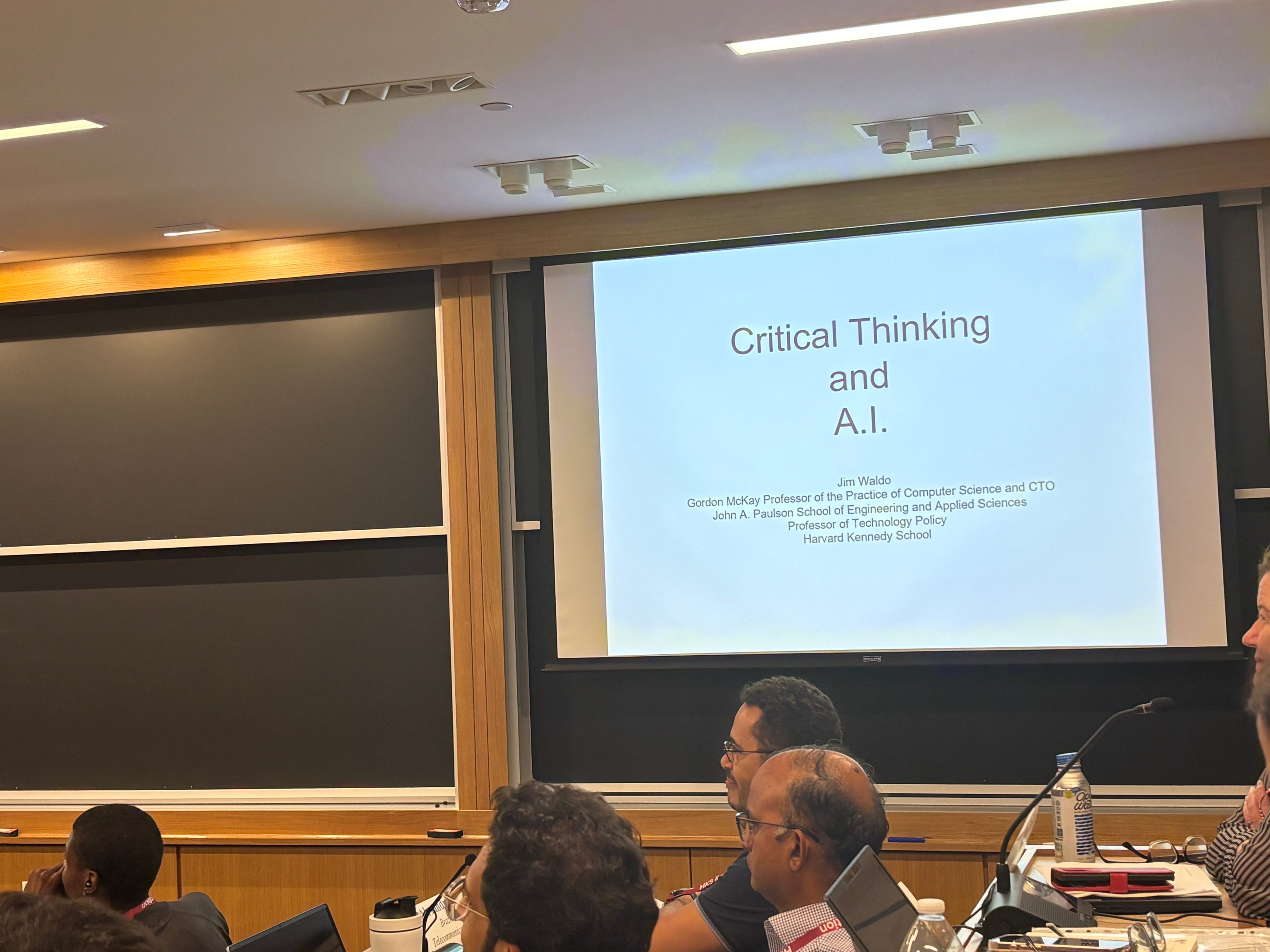
Session 4: Critical Thinking and AI
Speaker: Jim Waldo
Jim reminded us that AI is just a tool—and sometimes a very fallible one. Drawing on his background in philosophy and linguistics, he challenged us to maintain intellectual skepticism, even as AI becomes more pervasive.
AI, he said, often becomes invisible the moment it “works.” From spell checkers to recommendation engines, much of what we once called AI is now just… technology.
His core message? Never stop thinking critically—because AI won’t do it for you.
Final Thoughts
What made today special wasn’t just the content (which was exceptional), but the quality of people I engaged with throughout the day. Whether it was senators, parliamentarians, CTOs, or educators—these conversations reminded me why I’m here.
This isn’t just about learning how AI works. It’s about shaping how AI can serve society—and how we, as leaders, must think, act, and collaborate to ensure that it does.
More to come.