

Tempe, AZ — August 22, 2025
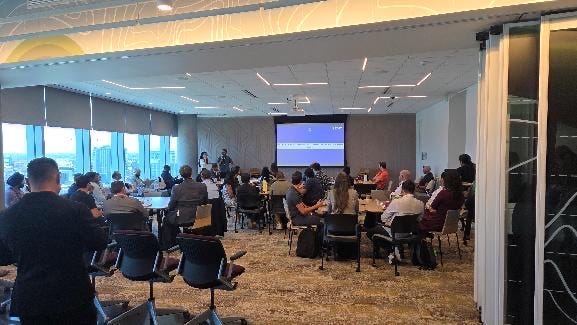
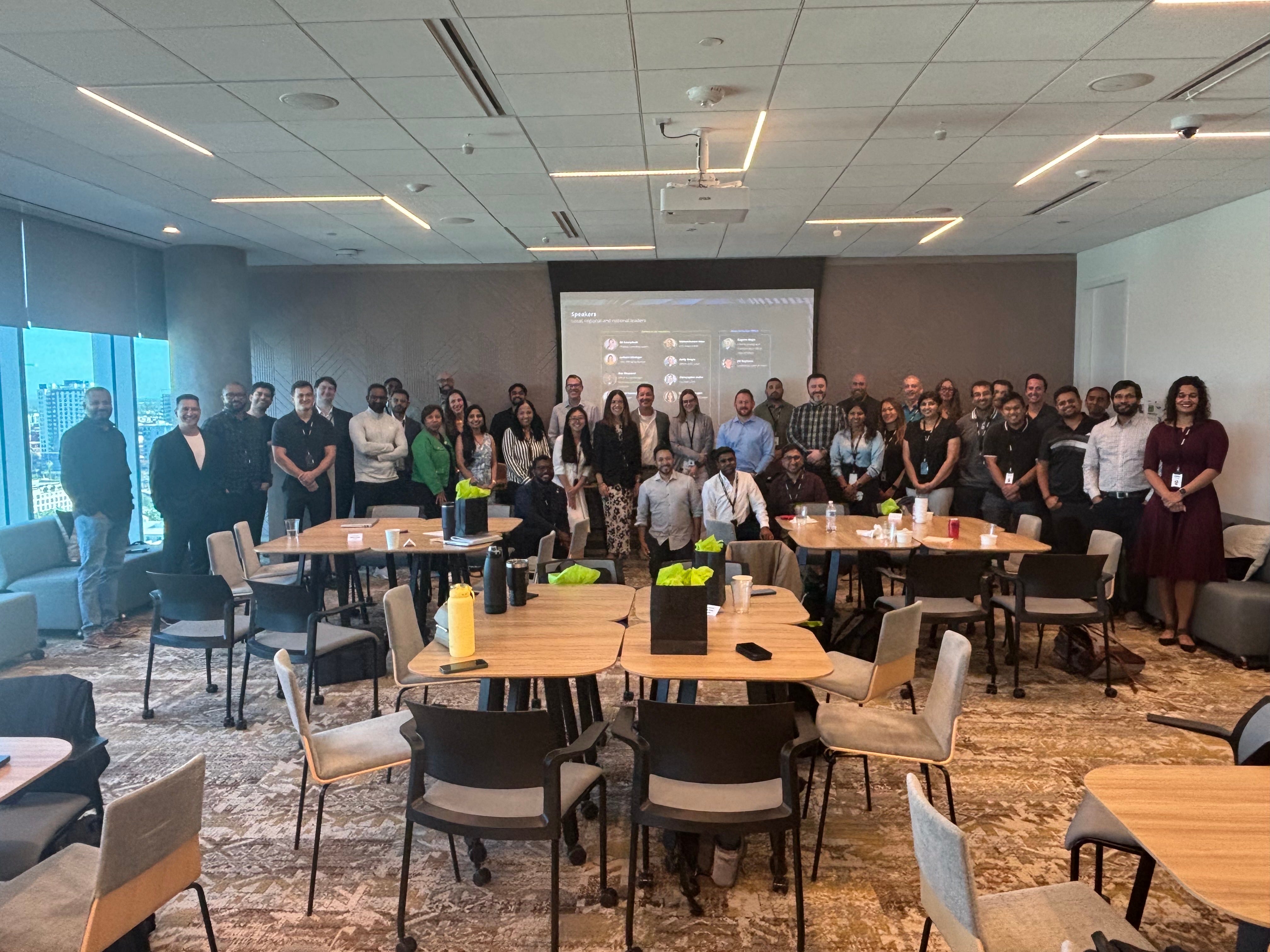
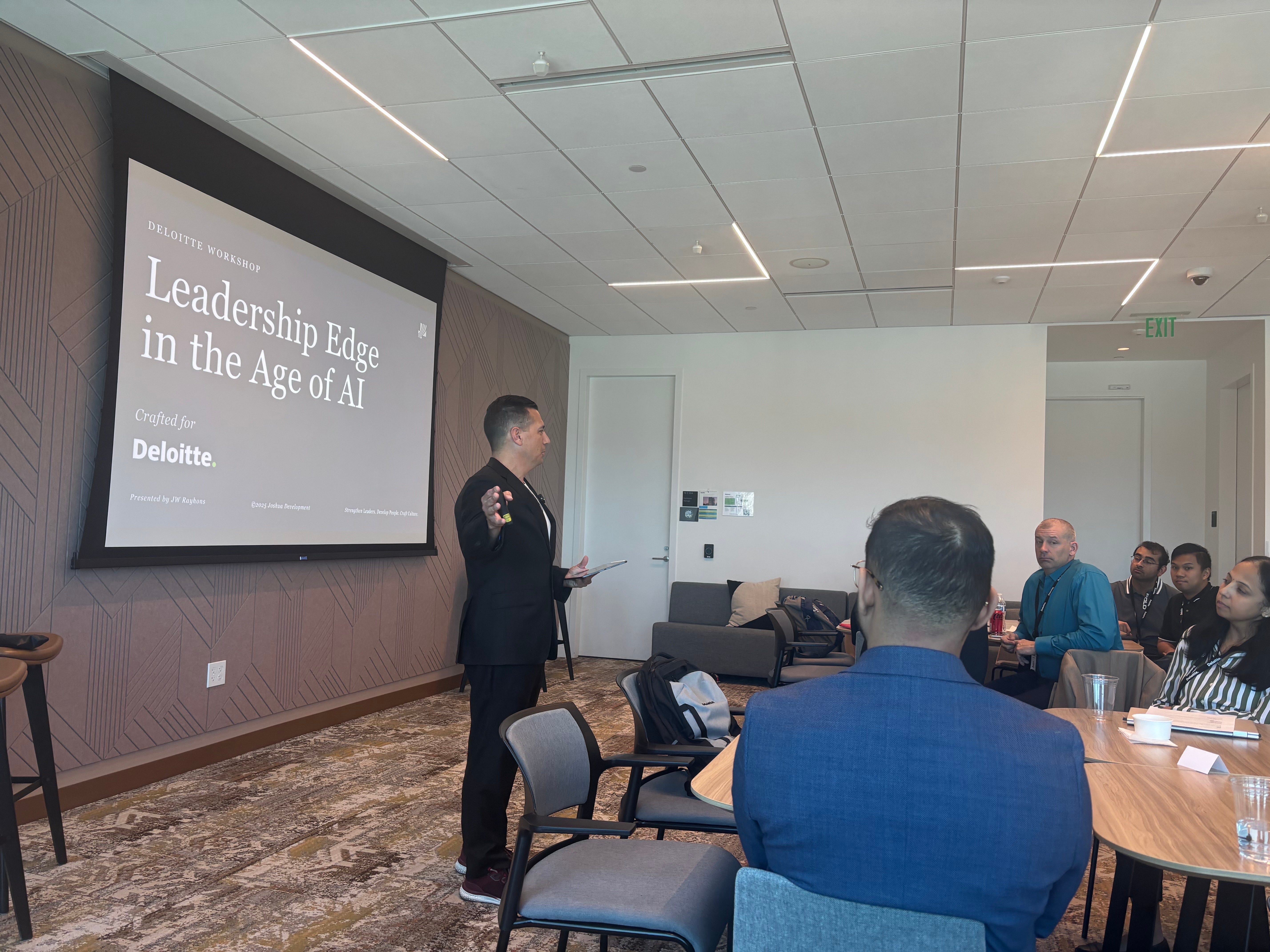
Last Friday, we gathered a cross-section of Arizona practitioners, leaders, and community partners to wrestle with a big question: how do we lead well in an AI-shaped world—without losing the human center? The room was full, the dialogue was lively, and the energy felt like a launchpad, not a landing.
Why we did this
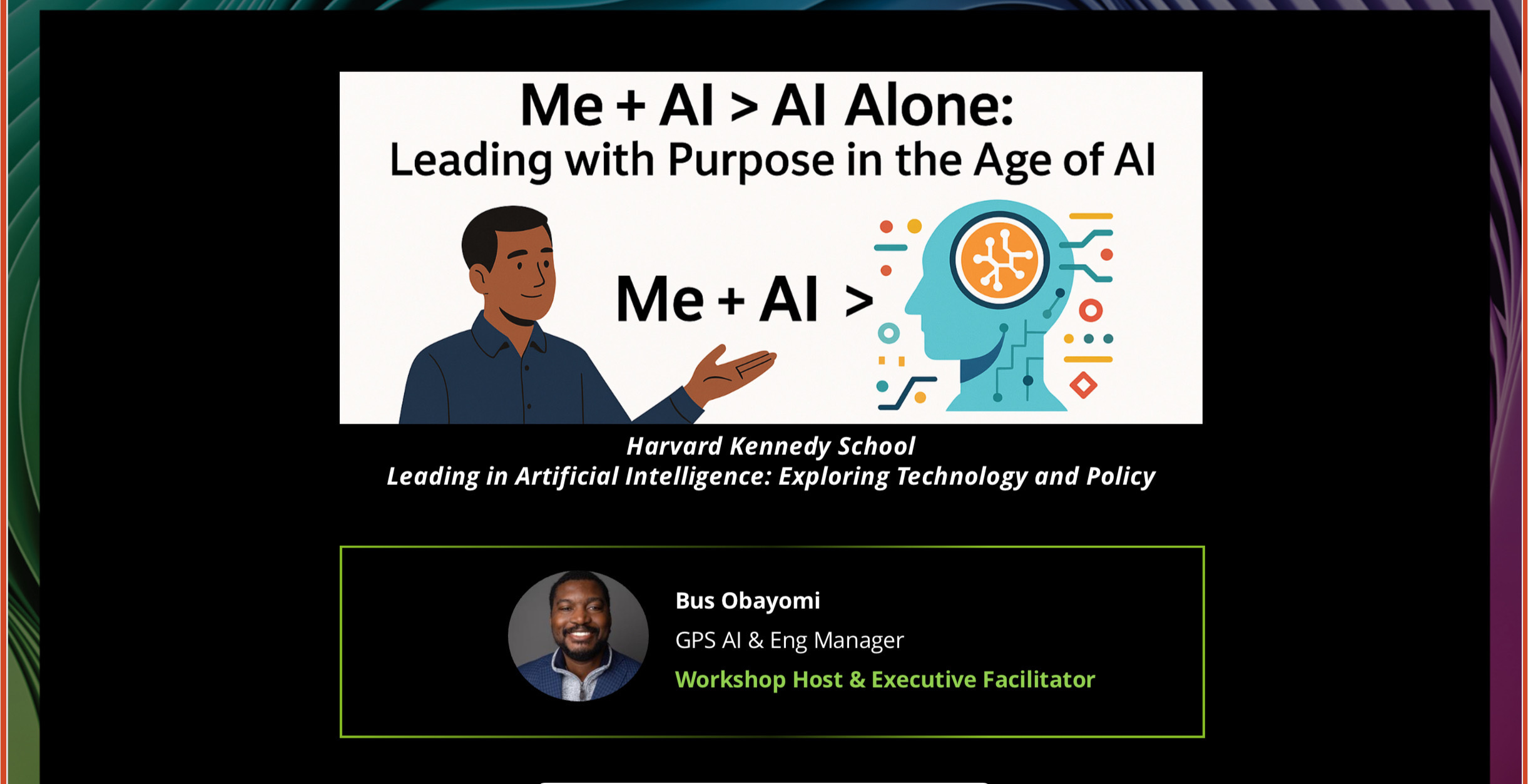
I’ve spent the summer immersed in Harvard Kennedy School’s Leading in the Age of AI program. Coming home, I wanted to translate those insights into something practical for our community: tools you can use on Monday, stories that inspire action, and a network that strengthens your next step.
Who was in the room
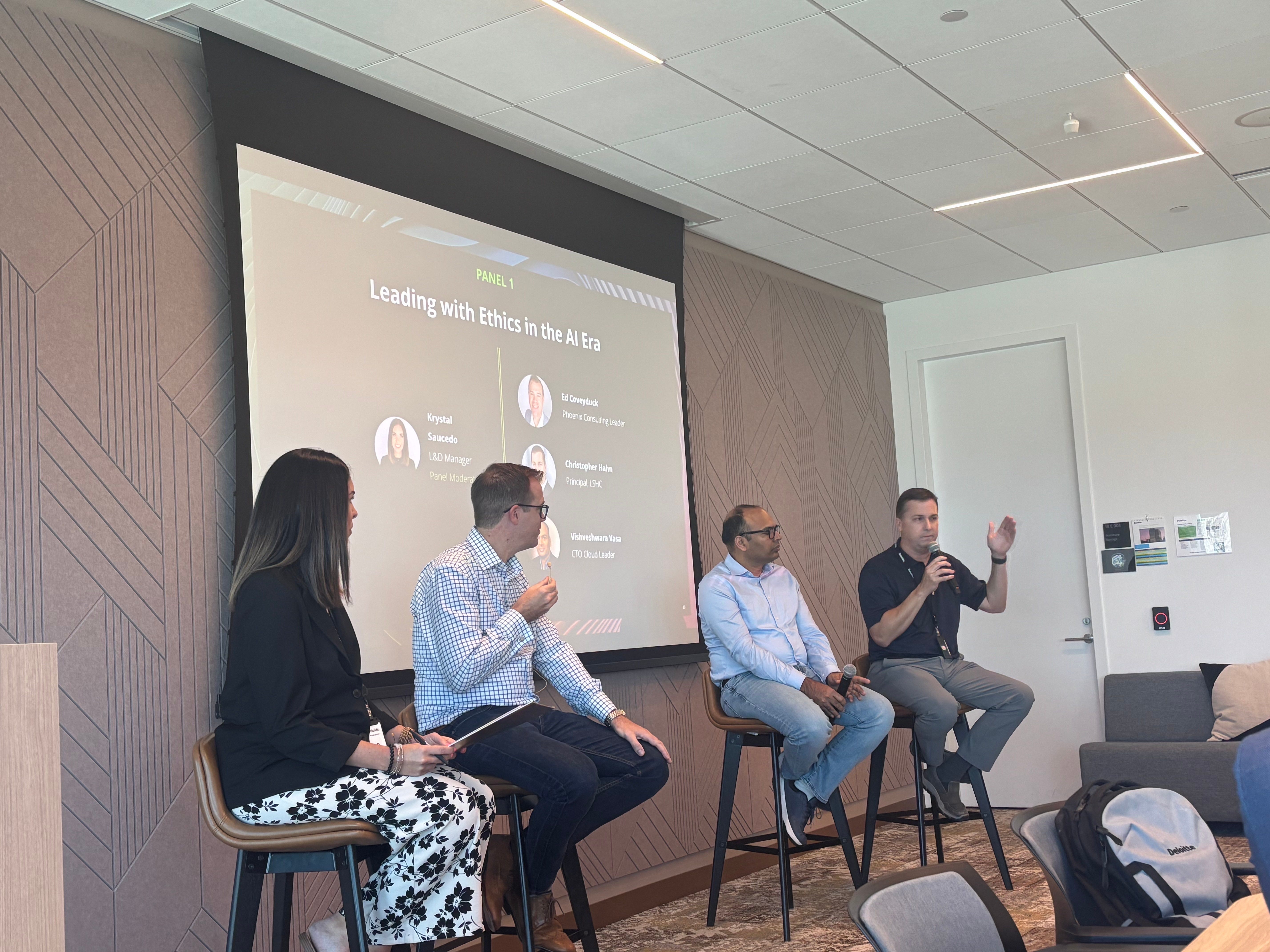
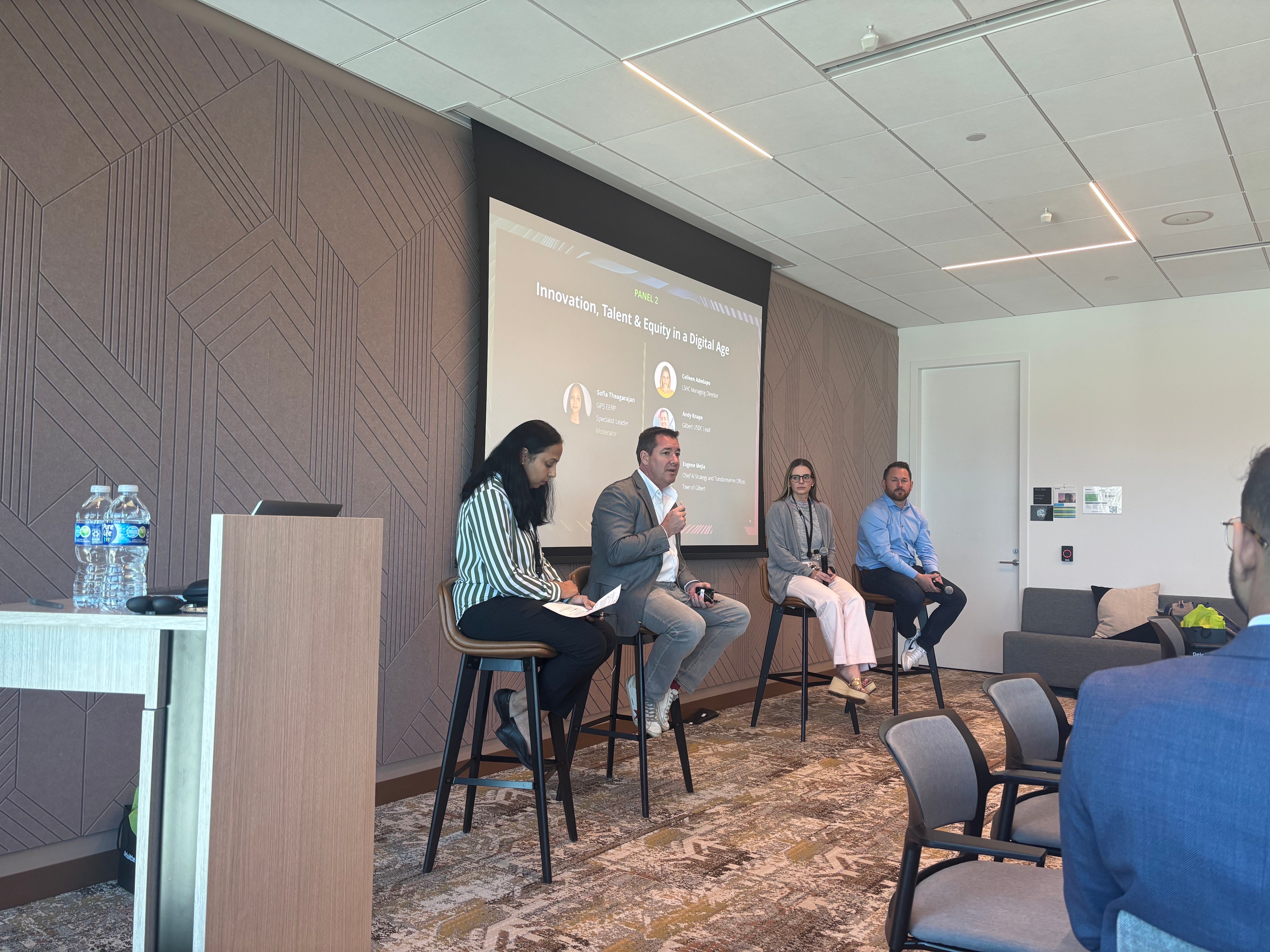
We were fortunate to have voices spanning delivery leaders, data & AI practitioners, and public-sector innovators, including Ed Coveyduck, Colleen Adedapo, Chris Hahn, Vasa Vishveshwara, and Eugene Mejia. Each brought a different lens—governance, delivery, architecture, and community impact.
The three big ideas we unpacked
1) Lead with clarity before capability
AI tempts us to start with tools. We flipped that script. We defined the outcomes that matter (client value, trust, and measurable impact), then mapped the minimum viable capabilities to achieve them. Capability follows clarity.
Try this: Write a one-sentence “north star” for your AI effort. If it doesn’t mention value, users, and risk posture, keep refining.
2) Govern what you’re willing to scale
We introduced a simple AI Risk Matrix—pairing use-case criticality with model/ data risk—to decide where to experiment and where to harden. Attendees practiced placing real use cases on the grid and identifying the “go/no-go” controls that unlock progress without slowing delivery to a crawl.
Pro tip: Document decision rights early (who approves data use, model updates, and deployment). Governance is a speed enabler when it’s explicit.
3) Make delivery visible—and teach the system to learn
We walked through a delivery pattern that blends SAFe ways of working with data/AI realities: short, observable increments; model + data readiness gates; lightweight MLOps hygiene; and feedback loops that turn adoption signals into backlog fuel.
Template to steal: Outcome → Hypothesis → Small experiment → Decision → Scale/Stop. Repeat.
Five takeaways attendees said they’ll use this month
Problem framing before platform: a 30-minute stakeholder canvas to align on value, decision points, and risk appetite.
The “MVP governance pack”: data inventory, model card, evaluation plan, and rollback procedure—kept to five pages, not fifty.
Value tracking you actually update: 3–5 metrics tied to cost, cycle time, and quality—not vanity.
A shared language for risk: the AI Risk Matrix gave executives and engineers a way to say “yes, if…” instead of “no.”
Community matters: pairing new practitioners with seasoned guides accelerates learning and keeps us honest.
A few moments that stuck with me
When a team mapped a customer-service assistant to “medium criticality / moderate risk,” they immediately saw how synthetic test data + human-in-the-loop could speed approval.
A delivery lead shared how transparent burndowns and issue logs changed the client conversation from status to solutions.
Several folks reflected that the hardest part isn’t the model—it’s adoption: training, trust, and change management.
What’s next
We’ll keep this momentum going with:
Monthly learning touchpoints (short, practical sessions you can bring your team to).
A starter kit: templates for risk triage, model cards, evaluation plans, and a one-page adoption checklist.
A running showcase of Arizona-based AI wins—because local examples build confidence.
If you want the slides, templates, or the AI Risk Matrix, drop a comment or email me and I’ll send the packet.
Gratitude
Huge thanks to our speakers and to everyone who showed up ready to learn and contribute. Your questions sharpened the content, and your stories grounded it in the realities of delivery.
Call to action
Subscribe to get the toolkit drop and the September session invite.
Bring a colleague next time—especially someone outside your immediate team.
Send a challenge you’re wrestling with; we’ll feature a live teardown in an upcoming post.
See you soon—and keep building with wisdom and courage.
— Bus Obayomi
Tempe, Arizona
AI & Data | Leadership & Community | Bridging vision to value