

I remember leaving a community meeting a few years ago thinking, These two people need to know each other.
One was a business leader looking for meaningful ways to invest in the community. The other was leading an organization tackling a challenge that business leaders genuinely cared about. They were working toward the same outcome, yet they had never met.
A few days later, it happened again.
Then again.
After a while, I couldn’t ignore the pattern.
Our communities don’t always suffer from a lack of good people or good ideas.
Sometimes they simply suffer from a lack of connection.
I couldn’t stop thinking about it. Everywhere I went, I saw remarkable people doing remarkable work—but often in parallel worlds. Business leaders rarely crossed paths with educators. Faith leaders wanted to serve but didn’t know nonprofit organizations already meeting those needs. Government officials were looking for community partners while entrepreneurs were asking how they could give back.
Eventually, I stopped asking why it kept happening and started asking what I could do about it.
That’s how the Building Bridges Leadership Foundation was born.
The vision wasn’t to create another nonprofit or another networking event.
It was to become a catalyst.
A place where leaders from business, education, government, faith communities, nonprofits, and technology could meet, learn from one another, and discover that they could accomplish more together than they ever could apart.
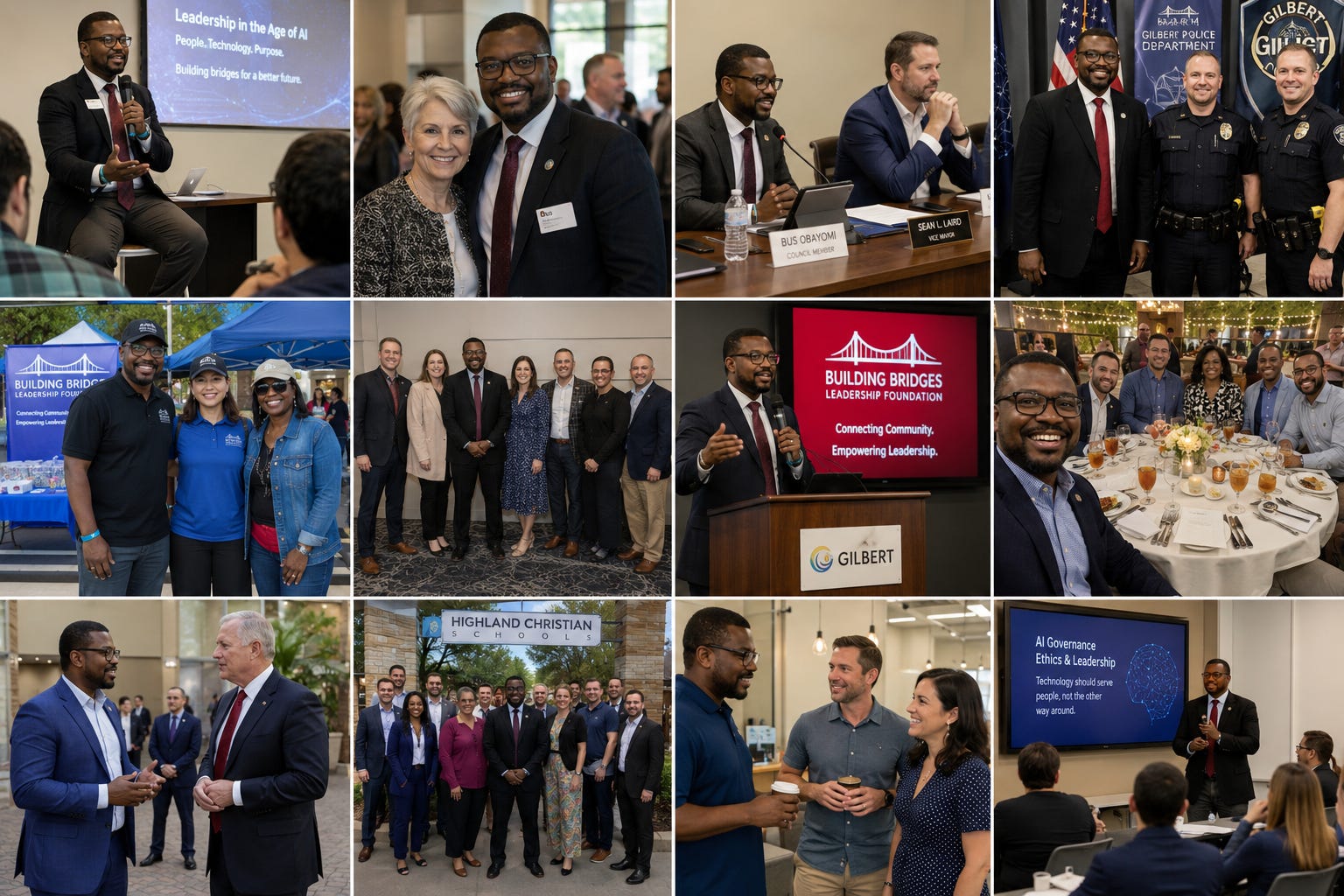
So we began hosting monthly leadership seminars.
What happened over the months was both humbling and inspiring.
I watched conversations become collaborations.
Business leaders connected with nonprofits they had never heard of. Community leaders discovered resources sitting just outside their own circles. New friendships formed. People found mentors. Others found board members, speakers, sponsors, career opportunities, and trusted advisors.
More than once, I watched a single introduction grow into a partnership that served our community in ways none of us could have predicted.
It reminded me that meaningful leadership often begins with a simple introduction.
Those experiences also taught me something about myself.
Because I’ve spent my career moving between consulting, artificial intelligence, technology, higher education, nonprofit leadership, faith communities, and civic engagement, I’ve often heard versions of the same questions.
“Who is Bus?”
“What’s his title?”
“Who’s behind him?”
They’re fair questions.
Our culture often assumes influence follows hierarchy. If someone is making an impact, there must be a prestigious title, a powerful organization, or someone important behind them.
If I’m honest, there were seasons when those questions bothered me.
I wondered whether I needed another title.
Another degree.
Another promotion.
Another organization behind my name before people would fully embrace my leadership.
For years, I thought leadership required permission.
Permission from the right title.
Permission from the right organization.
Permission from someone with more authority.
Eventually, I realized I was asking the wrong question.
Leadership isn’t validated by a title.
It’s validated by trust.
The people whose lives I’ve been fortunate enough to impact rarely remember my job title.
They remember whether I listened.
Whether I followed through.
Whether I connected them with someone who could help.
Whether I created value before asking for anything in return.
That realization changed me.
I stopped feeling the need to explain every opportunity that came my way.
I stopped trying to fit neatly into someone else’s definition of success.
Instead, I began focusing on faithfully stewarding the relationships, gifts, and opportunities God had entrusted to me.
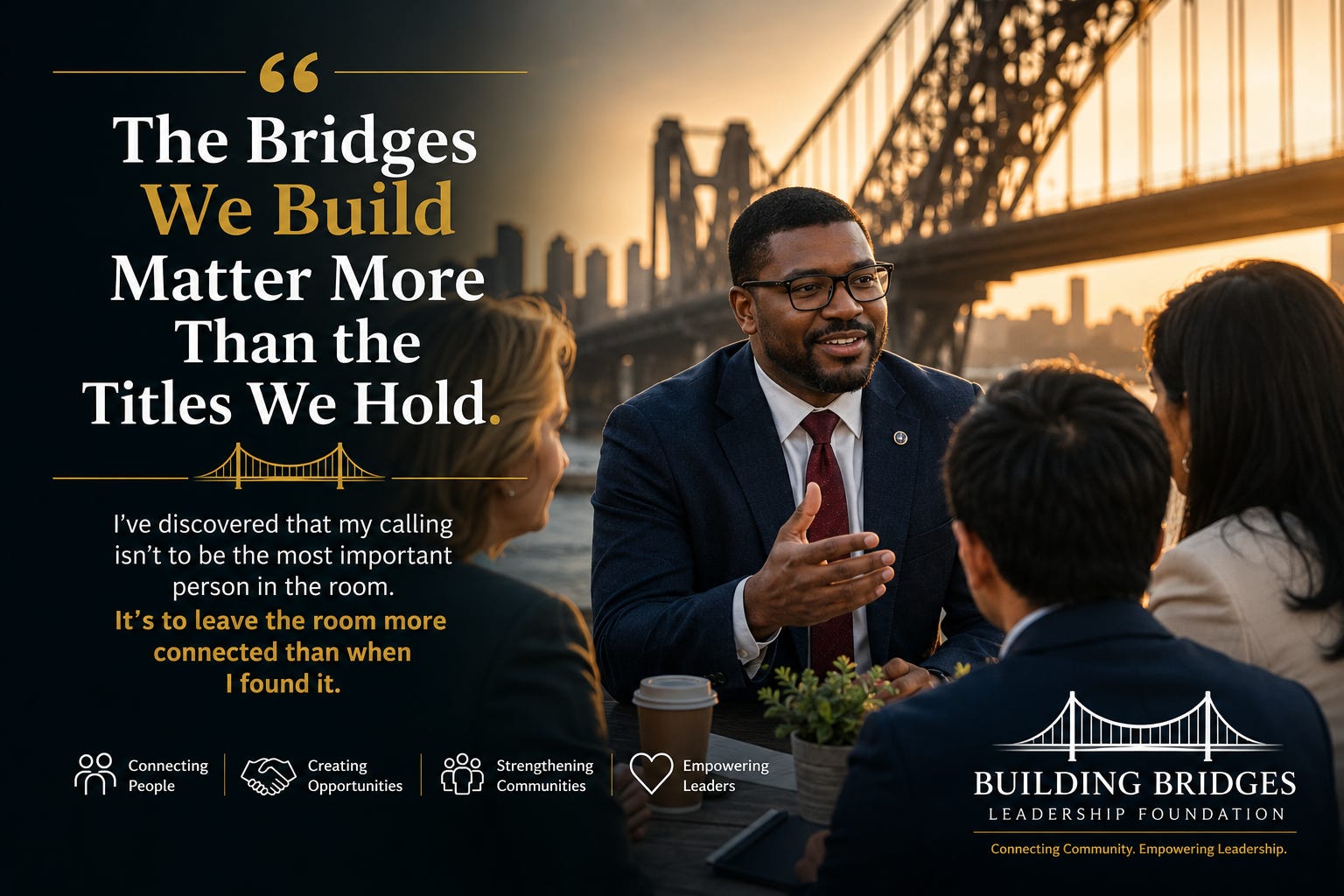
I’ve discovered that my calling isn’t to be the most important person in the room.
It’s to leave the room more connected than when I found it.
As someone who spends much of my professional life helping organizations navigate artificial intelligence and digital transformation, people sometimes assume technology is my greatest passion.
It isn’t.
People are.
Technology is simply another bridge.
When used wisely, it can connect people, expand opportunity, and solve problems that once seemed impossible. But if we aren’t intentional, it can also deepen division and isolation.
That’s why I believe the future doesn’t simply need more AI experts.
It needs more bridge builders.
People who can build trust across differences.
People who can connect ideas across industries.
People who can bring together educators, entrepreneurs, pastors, technologists, nonprofit leaders, and public servants around a common purpose.
That’s the kind of leadership I aspire to practice.
Not leadership from the top.
Not leadership defined by status.
But leadership that connects.
Leadership that serves.
Leadership that opens doors for others.
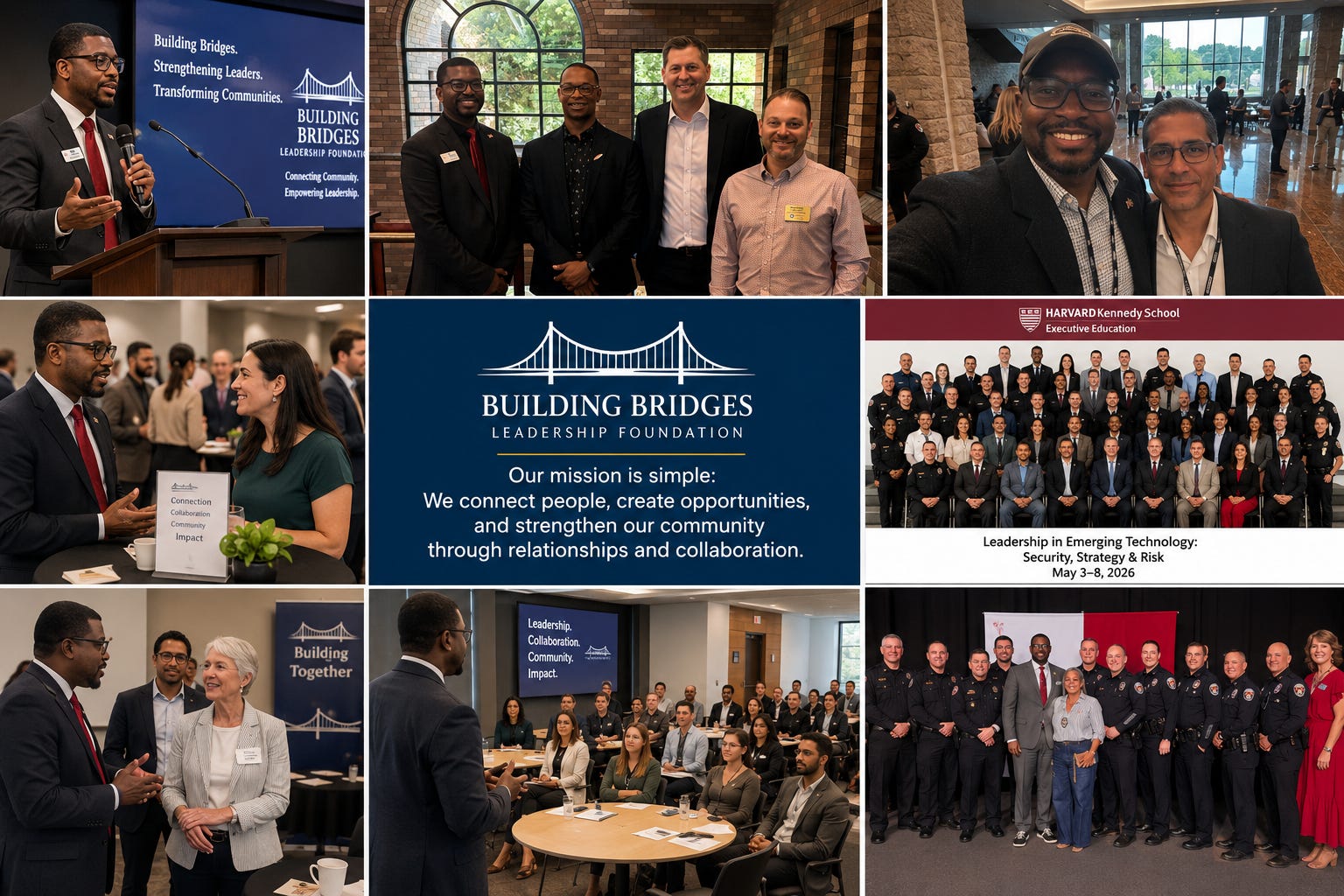
Whether I’m working with executives, educators, pastors, students, entrepreneurs, nonprofit leaders, or public servants, my mission remains the same.
To connect people.
To create opportunities.
To help others succeed.
To build bridges where others see barriers.
Looking back, I’m grateful for every title I’ve held.
Each one taught me something.
Each one opened a door.
But none of them define me.
If my life leaves any lasting legacy, I hope it isn’t because of a position I held.
I hope it’s because I helped people find one another.
Because I opened doors for others.
Because I connected leaders who otherwise might never have met.
Because I built bridges where others saw boundaries.
Because titles may open doors.
But bridges change communities.